Rummy How-To: Build a Simple Turn-Time Routine
Online rummy rewards attention, but attention is not the same as staring at a timer. A useful turn-time routine gives you a few repeatable questions to answer before you draw, keep, or discard. It is especially helpful for newer players who know the rules but lose track of their plan when the table moves quickly.
Start by separating observation from action. When your turn begins, first notice the visible information: your current groups, the top discard, the cards that have recently appeared, and the approximate stage of the hand. Do not decide immediately. A two-second pause prevents the last discard from pulling your whole plan in a new direction.
Next, name your best current route in plain language. It might be “finish the heart sequence,” “protect the pure sequence,” or “reduce the isolated high cards.” The route does not need to be perfect. Its purpose is to give you a comparison point. If a draw improves that route, it deserves attention. If it only creates a new possibility while leaving several weak cards untouched, it may be a distraction.
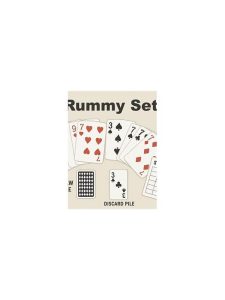
Use the discard pile as a question rather than an instruction. Ask what the visible card would complete, and then ask whether taking it reveals useful information to other players. A card can be attractive and still be a poor choice if it forces you to retain an awkward pair or abandon a safer structure. If the pile offers nothing clear, the closed deck is a valid neutral choice under the rules of the table.
Before discarding, perform a quick damage check. Look at each candidate card and ask whether removing it destroys a complete group, breaks two possible sequences, or gives away a pattern you want to keep quiet. Then choose the discard that leaves the most flexible hand. This is more reliable than automatically throwing the highest card or the newest card.
Finally, confirm the action and stop analysing after you commit. Replaying every alternative while the turn is over adds stress without changing the result. After the round, you can review whether your routine worked: Did you identify a route? Did you compare the draw options? Did the discard preserve flexibility? Keeping those notes brief makes the next session easier.
The routine is not a promise to use the same strategy every hand. It is a timing aid. Observation, route, draw, damage check, and commitment create a calm sequence that fits most turn clocks. With practice, the questions become faster, leaving more mental space for the changing information at the table.