Rummy Guide: Keep a Neutral Record of Assumptions

A hand review becomes more useful when it separates what you saw from what you inferred. Players often remember an opponent as “definitely building hearts” or a draw as “certainly coming next,” even though the original evidence was weak. A neutral record keeps those conclusions testable.
Use two headings: observations and assumptions. Under observations, write facts such as “the opponent took a seven from the discard area” or “the nine of clubs was visible.” Under assumptions, write interpretations such as “they may be developing a club sequence.” Keep the word “may” or a confidence label so the note does not turn a guess into a fact.
Before a discard, list the assumption that influences your choice. Then add one alternative explanation. If you think a visible pickup means an opponent needs adjacent cards, the alternative might be that they took it only to reduce their own penalty. This does not require endless speculation; one credible alternative is enough to stop overconfidence.
After the hand, compare the record with later evidence. Did the opponent’s actions support your assumption, contradict it, or remain ambiguous? Score the quality of the reasoning rather than whether the final result was favorable. A correct decision based on weak evidence may need improvement, while an unsuccessful decision based on strong evidence may still have been sound.
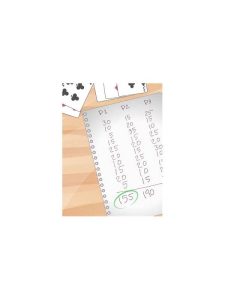
Keep records short. Three observations, two assumptions, and one lesson are enough for most hands. If writing becomes a burden, use symbols such as O for observation, A for assumption, and Q for uncertainty. The practice matters more than the format.
Neutral records are especially valuable after a loss, when frustration encourages absolute explanations. They reveal whether the problem was a rules mistake, a narrow plan, incomplete information, or simply an unfavorable outcome. By protecting the difference between evidence and belief, you build a review habit that improves decisions without promising control over random draws. You can also use the record before a hand ends. When a new card contradicts an assumption, cross out the old interpretation and write the update beside it. This makes flexibility visible and prevents you from defending an earlier theory merely because you wrote it down. A good record changes when the evidence changes. Its purpose is better judgment, not a permanent account of who was right. The next hand then starts with a clean slate instead of an inherited conclusion. This keeps future reviews grounded, brief, and open to correction.