Rummy Comparison: Known Information Versus Potential Information
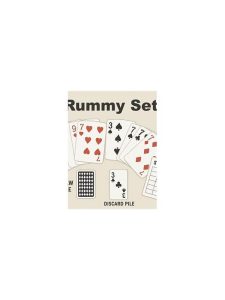
Many rummy choices look difficult because they mix two different kinds of value. A visible discard provides known information: you can see its rank and suit and calculate at least one immediate use. A closed-deck draw provides potential information: it might be excellent, but its value is unknown until the card appears. Comparing these categories helps prevent hope from being mistaken for a plan.
Known information is strongest when it completes or protects a clear structure. A visible card that finishes a pure sequence has a concrete benefit. So does a card that turns a flexible pair into a group while leaving another route intact. Even then, check the cost. Taking a useful card may reveal your interest in a suit, and the resulting hand may become too narrow.
Potential information has a different role. The closed deck can keep your intentions less visible and may offer a card that supports several routes. Its advantage is flexibility, not certainty. Do not describe an unknown draw as “likely” simply because it would be convenient. Instead, list the useful cards you could receive and notice how many cards would actually improve the hand. If only one precise card saves the plan, the potential value is fragile.
The discard pile is often preferable when it improves your hand immediately without creating a large defensive problem. The closed deck is often preferable when the visible card has little use, when taking it would expose a pattern, or when several unseen cards would help. These are comparisons, not universal rules. Table format, hand size, and the risk of an opponent declaring can change the balance.
A practical test is to compare the best case with the ordinary case. For a visible discard, the best case may be a completed sequence; the ordinary case is the structure you have after taking it. For a closed draw, the best case is the perfect connector; the ordinary case may be a card that does not fit. Prefer the option whose ordinary case leaves you stable, especially when the hand is advanced.
You can also compare information gained. Drawing from the deck tells you only what you received. Taking from the discard pile tells you that the card was available and may signal something about your priorities. Neither signal is absolute, and opponents can use misleading moves, but information has value when you record it carefully instead of treating every discard as a confession.
The goal is not to eliminate uncertainty. Rummy always contains hidden cards. The goal is to label uncertainty accurately. Known cards deserve concrete calculations; potential cards deserve probability-aware restraint. Once you make that distinction, many decisions become easier to explain and review.