Rummy How-To: Review a Discard Before Confirming It
The discard is often the final action in a turn, which makes it easy to perform on autopilot. A short review before confirmation can prevent mistakes that are difficult to repair. The review should be brief and repeatable so it remains useful even when the table is moving quickly.
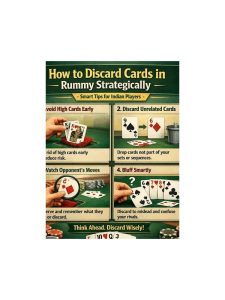
First ask whether the selected card has a current job. Check every visible group and sequence, including arrangements that are still only candidates. If the card is a bridge between two routes, do not release it until you compare the routes without it. A card can appear redundant in a sorted hand while quietly protecting the only path to a required sequence.
Second, check the hand after the discard. Count the remaining cards and groups, then verify that no minimum requirement has been broken. If a joker is involved, confirm that the replacement logic still works under the table rules. This is especially important when you reorganized several cards after the draw; the new layout may have changed which card is truly expendable.
Third, estimate the penalty of keeping the card. If it is high value and has no credible route, the review should support releasing it. If it is low value but flexible, the answer may be different. This step prevents the opposite mistake: protecting every connector forever because it might become useful.
Finally, consider the information you are giving away. A discard can reveal a suit, rank, or failed plan. You cannot hide all information, and strategic secrecy should not outweigh a sound hand. Still, if two cards are equally weak, prefer the one that gives away less about your remaining route or is less likely to help an opponent.
Use a fixed phrase such as “job, legality, penalty, signal” to remember the four checks. Once you finish, confirm the discard decisively and focus on the next turn. If you make a mistake, note the exact check that failed rather than replaying the whole hand emotionally. A consistent final review improves accuracy without slowing every decision to a crawl. You can practice the review away from a live table by dealing a sample hand and naming one discard before checking the four questions. Repeat with a changed draw and see whether the answer changes. This builds speed without attaching the exercise to a result. In live play, remember that a deliberate pause is cheaper than repairing a preventable mistake.