Rummy FAQ: Why Can a Low-Point Card Still Be Important?
Point value is useful for estimating risk, but it is not a complete description of a card’s role. A low-point card can be the only bridge between two sequence ideas, the final piece of a natural sequence, or a flexible connector that protects several routes. Discarding it simply because it carries few points can create a larger strategic problem.
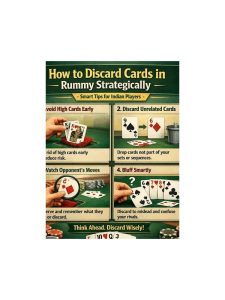
Before releasing a low-point card, ask what it connects. Look at the same-suit neighbors and matching ranks, then check whether the card is part of a pair or a partial group. If it supports two credible routes, give it a clear holding reason. If it is isolated and does not contribute to a required structure, its low value may make it a comfortable discard.
Legality comes first. Some formats require a natural sequence or a minimum number of groups. A low-point card may be the card that keeps that requirement possible. Evaluate the hand after the discard, not just the score attached to the card. A tidy-looking hand that cannot be declared is not an improvement.
Timing also changes the answer. Early in the hand, a low-point connector may be worth keeping while you gather information. Later, if its routes have not improved, the same card may finally be expendable. Conversely, a low card can become more important near the finish if it completes a legal group while your other cards are already settled.
Watch the discard pile, but avoid giving too much weight to one opponent’s action. A low card may look safe because it seems uninteresting, yet another player may be collecting exactly that rank or suit. No discard is risk-free. Choose the card with the weakest job in your own hand, then consider table information as a secondary check.
The practical rule is simple: discard low points when they are also low utility. Keep them when they connect, qualify, or preserve flexibility. Reviewing this distinction after a round helps correct a common beginner habit—the belief that card value and point value are always the same thing. This distinction is helpful when choosing between two equally low cards. Prefer the one that is less connected to your active structures and less likely to be needed for a required condition. If both are isolated, use table information and future flexibility as tie-breakers. The goal is to make a discard that improves the hand’s shape, not merely one that lowers its visible point total.