Rummy How-To: Label Cards by Role Instead of Rank
Many players sort a hand only by suit or rank. A second method is to label each card by its current role. This does not change the rules, but it can make hidden choices visible when several cards look similar.
Use five simple labels: anchor, connector, completion candidate, flexible pair, and isolated card. An anchor already belongs to a reliable group. A connector sits between cards or can link in more than one direction. A completion candidate needs one known card to finish a group. A flexible pair has multiple possible developments. An isolated card has no convincing route yet.
Apply the labels after your first sort. A card may carry two possible labels, so choose the role most useful for the next decision. For example, a seven may be a completion candidate for one sequence and a connector for another. Writing down both possibilities can be useful early, but as the hand develops, narrow the label based on visible cards and the discards already made.
Labels help with discards because they describe opportunity cost. Releasing an isolated card may reduce penalty without changing your plan. Releasing a connector may close two routes. Releasing an anchor may be correct only if the group has become unrealistic. This is more informative than saying that one card is simply “good” or “bad.”
Update the labels whenever a new card arrives. A flexible pair can become an anchor, while a completion candidate can become isolated after its needed card appears in the discard area. If you keep old labels unchanged, the system becomes another source of bias. The point is to make reassessment faster, not to create permanent categories.
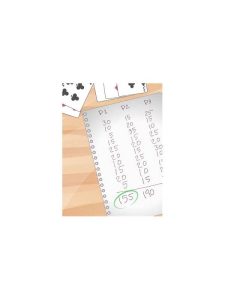
Try the method in a practice hand with paper beside you. Mark only the cards that create genuine choices; do not annotate every detail. At the end, note which label changed most often and whether that change improved your discards. With repetition, you may no longer need written labels. The mental habit of asking “What job is this card doing now?” can keep your hand organized when the visual layout becomes crowded. Role labels are particularly useful when a hand contains repeated ranks or several cards of one suit. They stop you from assuming that visual similarity means strategic similarity. Two cards can share a rank while serving different purposes: one may complete a set, while the other is the only bridge in a promising sequence. Naming the job of each card makes that distinction easier to protect.