Rummy Guide: Create a Quiet End-of-Session Review

An end-of-session review should close the activity, not reopen it. Set aside a few quiet minutes to record one decision, one piece of information you missed, and one rule for next time. The purpose is learning and closure, not finding a reason to play another hand immediately.
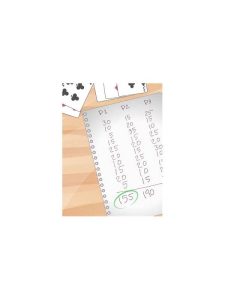
Begin with the session facts. Note the variant, approximate duration, and whether you followed your time and spending boundaries. Do not write only the result. A win can contain a poor process, and a loss can contain a sound decision. Recording the setting helps you distinguish a card lesson from a fatigue, distraction, or interface problem.
Choose one turning point. It might be an early discard, an open-deck draw, a route switch, or a declaration check. Describe what you knew at that moment. Then state the option you selected and the reason you gave yourself. Keep the description neutral: “I kept the pair because it appeared to have two routes,” rather than “I made a stupid mistake.” Neutral language makes review more accurate.
Separate facts from hindsight. A later draw is a fact about what happened, but it was not available when the decision was made. Ask whether the chosen route had reasonable completion cards, whether the alternative had a lower cost, and whether you followed the rules. If the decision was sound but the result was poor, record that explicitly. If the reasoning was weak, write a replacement question rather than a vague criticism.
End with one action for the next practice session. Examples include “check the open pile before accepting a pair,” “set a checkpoint after three draws,” or “review the declaration groups from left to right.” One action is easier to test than a long list of promises. After writing it, close the app or put away the cards and take the planned break.
Keep notes free of passwords, payment details, personal identifiers, or screenshots that expose private information. Store them somewhere appropriate and review patterns later, when you are not emotionally attached to the latest result. A quiet review is successful when it produces a specific lesson and makes it easier to stop. The next session can begin with a clear question rather than an urge to correct the past immediately.
If the session felt unusually tense, record that as a condition rather than a character judgment. Fatigue, interruptions, and a confusing interface can affect choices. Adjust the next session’s length or environment if needed, and keep the review focused on one controllable change. This makes the record useful without turning it into a reason to continue playing.