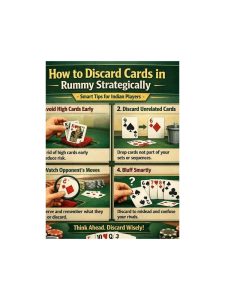
Rummy FAQ: Why Is an Isolated Middle Card Valuable?

An isolated middle card may be valuable even when it is not currently part of a group. Cards near the middle of a suit often have more neighboring ranks available than an extreme card. For example, a card can potentially join a sequence on either side, while an ace or king may have fewer legal directions under the format. This is a general principle, not a guarantee.
Look at the card together with the rest of the hand. A middle card with one adjacent card already present is more promising than a completely isolated middle card. Two nearby cards of the same suit may support a nearly complete sequence, while a lone card may still require several exact draws. Count the actual connections rather than awarding value based on rank alone.
Timing changes the answer. Early in a hand, a flexible middle card may be worth keeping while you learn what arrives. Near the end, an unconnected card can become a liability if the required neighbors have not appeared. A high card may be better to release for point protection, even if the middle card remains unfinished, or the reverse may be true if a middle-card route is nearly complete.
Consider the discard context as well. If the card could easily help an opponent complete a visible sequence, releasing it may carry more risk. That does not mean you must keep every useful card. Compare the risk with your own repair needs, and remember that you cannot know every hidden card.
The best question is not “Is a middle card always good?” Ask instead: “How many credible improvements does this card have, how much time remains, and what would I discard instead?” That framing turns a rank-based shortcut into a complete hand evaluation. Jokers can change the analysis because they may complete a group without needing the middle card’s neighbors. Even then, preserving a middle card may be sensible if it supports a pure sequence or several non-joker routes. Consider what the flexible card is doing elsewhere before deciding. A card is valuable because of its role in the whole hand, not its printed rank in isolation. Review the role after every draw. The same principle applies to a low card with only one nearby connection. Rank is a useful starting clue, but the hand’s actual neighbors, time remaining, and discard alternatives determine whether keeping it is sensible. Review this choice after the hand without judging it by the next card alone. The question is whether the card had a credible role when you kept it, not whether luck later rewarded or punished the decision.