How to Count Useful Rummy Draws Without Overcomplicating the Math
Probability can sound intimidating at a rummy table, but you do not need advanced mathematics to compare two draws. A basic count of useful cards is often enough to prevent a vague hope from controlling your decision. The goal is not to predict the exact next card. It is to compare the quality and number of plausible improvements.
First describe the hand in plain language. Suppose you have two cards that could become a sequence in two different ways. List the missing ranks that would help each route. If one route needs a single rank and the other needs three possible ranks, the second route has broader immediate potential. This does not automatically make it correct; the cards may be valuable for other reasons, or the draw may be unlikely to arrive soon.
Then remove duplicates from your count. If the same card helps two ideas, count it once when estimating the chance of drawing a useful card. Counting it twice creates false confidence. Also distinguish between a card that improves the hand and a card that completes a legal group. A near match can be useful while still leaving more work to do.
Keep uncertainty visible. The deck may contain cards you cannot see, cards already discarded, and cards held by opponents. You rarely know the exact remaining total in a casual online hand. Use words such as “more open” and “more narrow” instead of pretending to know a precise percentage. When two routes are close, use secondary tests: which route leaves fewer high-value leftovers, which one keeps a potential pure sequence, and which one produces a safer discard?
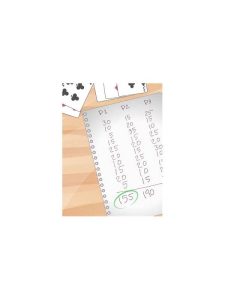
Practice with small examples away from a live table. Take a sample thirteen-card hand and circle every card that improves a chosen plan. Repeat after removing the visible discards. This trains your eye to count outs quickly. The best counting habit is brief: name the plan, list the helpful ranks, remove duplicates, and compare the leftovers. It turns probability into a decision aid rather than a source of pressure.
You can make the routine more useful by writing down why an out is useful. A rank that completes a legal sequence is different from one that only creates another pair. Also note whether the draw would force you to break an existing group. This prevents a raw count from hiding structural costs. Over time, compare your estimates with the cards that actually appeared, but do not treat a missed draw as a bad estimate. A sound count describes opportunity before the draw; it never promises the draw will arrive.