Rummy Tips: Protect Your Last Flexible Connector

A flexible connector can join more than one useful route. A five of hearts might connect to a four-six run, while also pairing with another five for a set. Such a card can keep a difficult hand alive. It can also become a reason to postpone a necessary discard. The answer is to protect it deliberately, with a deadline.
Start by listing the connector’s real routes. Count only routes that are plausible under the current rules and visible cards. If one route needs two exact cards already seen in the discard pile, do not count it as equally flexible. A card with two realistic completions is stronger than one with four imaginary ones.
Then examine what the connector prevents you from doing. Does keeping it force you to hold a high singleton? Does it delay a pure sequence? Does it occupy the space needed to test a better card? Flexibility is useful only when it improves the whole hand. The connector may be valuable but still too expensive to keep.
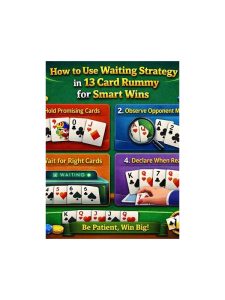
Set a deadline based on evidence. The deadline might be the next two draws, the appearance of a particular rank, or the point at which another group becomes complete. If the evidence does not improve by then, reclassify the card as conditional and consider releasing it. A deadline prevents “one more turn” from becoming an unexamined habit.
Be careful when the connector is your only bridge between groups. Breaking it may leave several isolated cards. In that case, first see whether another card can take over its job. If no replacement exists, compare the likely penalty of keeping the bridge with the penalty of abandoning the route. There is no universal answer, but the trade-off should be visible.
Near the end of a round, speed often matters more than theoretical flexibility. A connector that needs two events may be less useful than a low-point card that can be discarded safely. If another player appears close to declaring, shorten the deadline and favor robust legal arrangements.
Protecting a connector is a strategic choice, not a superstition. Identify its jobs, price its space, and decide when the evidence expires. This keeps flexibility available when it helps and releases it when it merely creates hope. The deadline should be flexible enough to reflect the format and table speed, but firm enough to prevent indefinite waiting. If a new card gives the connector a second strong job, extend the deadline consciously. If the table accelerates or your penalty grows, shorten it. State the reason for either change before taking the turn.