Rummy Tips for Managing Several Possible Sequences

Several connected cards can make a hand look promising in more than one direction. That flexibility is useful, but it can also produce clutter. If every pair is treated as a separate project, you may keep too many weak cards and delay a necessary discard. The goal is to rank possibilities, not to preserve all of them indefinitely.
Begin by marking the strongest route. A strong route usually has more than one way to complete, uses cards with nearby ranks, or overlaps with another useful combination. For instance, a middle card may connect on either side, while an edge card may have only one practical neighbor. The strongest route is not always the one with the most cards; it is the one with the best combination of support and flexibility.
Then identify a secondary route. The secondary route should share at least one card with the primary route or provide a sensible replacement if the first plan fails. Avoid keeping three unrelated pairs simply because each is technically possible. A small, ordered list makes it easier to recognize which card has become least valuable after every draw.
When you draw, update the ranking immediately. A new card may strengthen the secondary route and make the old primary route less attractive. Conversely, a card that appears useful can be a trap if it creates no complete group and forces you to retain several isolated cards. Put the newest evidence ahead of the emotional attachment to an earlier plan.
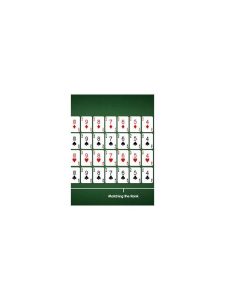
Set a limit for unresolved routes. After a few turns without meaningful improvement, release the weakest route and use the space for a lower-risk card or a point-saving discard. This is not giving up on a hand; it is preventing one uncertain idea from occupying all your choices. A ranked approach lets you stay adaptable while still making deliberate, readable decisions. You can make the ranking visible by arranging cards in three rows: committed groups, primary route, and secondary route. The lower row should not be allowed to grow without a reason. If a new card does not improve the primary or secondary route, it may be a candidate for release. This arrangement also helps when a card appears in two plans. Place it with the route that has the stronger completion evidence, then check whether the other route still has enough support to remain a fallback. In practice, review the rows after each draw rather than waiting until the hand feels difficult. Early corrections are usually cheaper than late ones because they preserve more alternatives. A clear ranking also reduces the urge to collect cards just because they share a color or rank. Keep the strongest route visible, make the fallback explicit, and release a weak possibility when its evidence no longer supports the space it occupies.