Rummy Tips: Compare Cards by Future Jobs

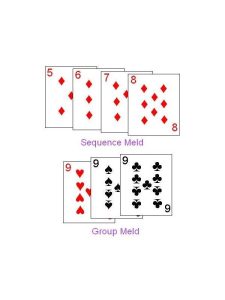
Rank and points are useful, but they do not fully describe a card’s value. A card can have several future jobs: completing a sequence, joining a set, connecting two partial groups, or serving as a low-cost release. Comparing cards by their future jobs helps you avoid discarding a flexible card simply because it is not currently grouped.
List the jobs for each candidate card. A middle card of a suit may connect on either side, while an edge card may have fewer sequence roles. A repeated rank may support a set, but only if enough copies remain plausible. A joker or other wild card may have many jobs, yet moving it can leave an important group incomplete. Count roles with the rules in mind.
Quality matters as much as quantity. Three theoretical jobs are not automatically better than one nearly certain completion. Give more weight to routes that use unseen connectors, reduce penalty, or help satisfy a required declaration. Give less weight to routes that depend on a single exact card or conflict with another high-priority group.
Compare opportunity cost. If you keep one card, what card must you release instead? A flexible card may be worth retaining when the alternative is an expensive isolated card. Conversely, a low-point card with many imagined roles may not justify breaking a confirmed group. The comparison should cover the whole hand, not just two cards in isolation.
Reassess jobs after visible information changes. A discarded connector can remove a role, while a new draw can create one. Keep your labels temporary. A card’s value comes from what it can do now under the current evidence, not from what it might have done several turns ago.
This approach produces calmer decisions because it asks a practical question: “What work can this card realistically perform?” The answer may change from turn to turn, and that change is useful information rather than a contradiction.
Record future jobs with simple labels such as sequence, set, bridge, penalty, and safety. A label is not a promise that the card will perform that job; it is a reminder to include the role in the next comparison. Remove labels when the required cards become unavailable or when a stronger route takes priority.
This method also discourages rank-based superstition. A middle rank may be flexible in one suit but useless in the current hand, while an edge card may complete an important group immediately. Judge the card in context, then update the judgment when the context changes.