Rummy Probability Basics for Smarter Card Choices

Probability in rummy is not a promise about the next card. It is a way to compare choices when several outcomes are possible. A player who understands that distinction can make calmer decisions and avoid treating a lucky draw as proof of a reliable system.
Start by listing the cards that would genuinely improve your hand. If you hold seven, eight, and jack of one suit, the nine and ten may help, but they are not equally useful if another group is already close to completion. Count useful cards rather than simply counting cards that look interesting. A draw that helps four possible combinations is usually more flexible than one that helps only one narrow plan.
The discard pile provides information, but it is incomplete information. Visible discards reduce the number of unseen copies available, while cards still in opponents’ hands remain unknown. If several cards of a rank have appeared, chasing that rank becomes less attractive. Conversely, an untouched rank may offer more possibilities, although an opponent may also be waiting for it. Use visible evidence as a small adjustment, not as certainty.
A useful routine is to compare three questions before every discard. How many cards improve my hand immediately? How many different shapes could those cards support? What useful cards might this discard give another player? The best move often balances your own outs with the risk of releasing a card that completes a likely sequence elsewhere.
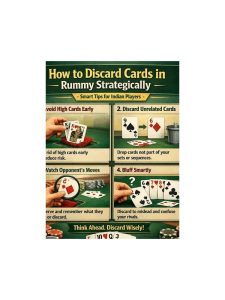
Probability also explains why high-value loose cards deserve attention. A king that is not connected has limited natural neighbors and can leave a large penalty if the hand ends suddenly. Keeping it for one more turn is reasonable when it supports several plans, but keeping it only because it might become useful is expensive. Set a review point and replace it if no connection develops.
Finally, record decisions instead of judging them only by results. A sensible choice can miss, and a poor choice can succeed. After a session, note the number of useful cards you identified, the information you overlooked, and whether a safer alternative existed. This turns probability from a slogan into a repeatable decision habit. One practical shortcut is to compare cards by opportunity cost. Keeping a card means giving up the chance to draw or retain something else. A middle card may be worth keeping because it connects in several directions, while an edge card may need a very specific partner. Revisit that comparison whenever the hand changes. Probability is most helpful when it supports a clear choice, not when it encourages endless calculation.