Rummy Practice: Reconstruct a Hand From Memory
You can improve rummy awareness without entering another paid table by reconstructing a finished hand. The exercise trains you to remember group changes, draws, discards, and turning points. It also reveals whether your decisions were based on visible evidence or on a story you created afterward.
Choose a recent hand for which you remember at least the opening cards and the final result. On paper, draw four sections: starting hand, new cards, your discards, and visible opponent actions. Fill in what you know without checking a replay. Use a question mark for anything uncertain. Mark the moment when your first plan changed and explain what caused the change.
Next, rebuild the hand in order. For each turn, write the card drawn, the card released, and the groups you were considering. If you cannot remember the exact card, record its rank, suit, or role, such as “a high isolated card.” The goal is not perfect transcription. It is to notice where your mental picture became incomplete.
Compare your reconstruction with any available history only after making your first version. Circle errors in one color and good observations in another. Did you remember a discarded connector as still being available? Did you overlook a natural sequence? Did an opponent’s pickup influence your discard, or did you only imagine that it did? Separate facts from interpretations.
Then identify one decision that could have used better information. Perhaps you held a narrow pair after its useful neighbors were visible, or perhaps you missed that a low-value card offered two routes. Write one practical adjustment for the next session. Keep it small, such as “check visible cards before protecting a pair,” rather than adopting a vague goal to play perfectly.
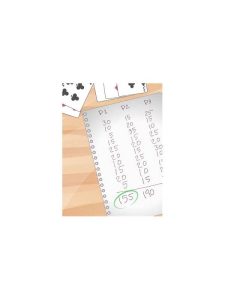
Finish by scoring the review process, not the result. Give yourself one point for each turn you can place accurately, one for each uncertainty you labeled honestly, and one for each actionable lesson. A loss can produce a strong practice score if the reconstruction is careful. Repeating this drill occasionally builds observation skills and makes future hand reviews more trustworthy. If you remember very little, begin with a screenshot or a written note from a practice hand rather than forcing a reconstruction from memory. Cover the details, rebuild the sequence, and then compare. Gradually remove the aid. The aim is to strengthen attention, not to prove that memory is perfect. Honest gaps are valuable because they show which parts of the table deserve more deliberate observation.