Rummy Practice: Build a Hand From Three Random Groups
A useful offline drill begins with three small groups rather than a complete hand. Create one short same-suit connection, one pair or set possibility, and several random cards. The aim is not to simulate every detail of a live table. It is to practice turning a scattered collection into a ranked list of decisions.
Start by naming the anchor. An anchor is the group with the clearest current structure, such as a pure sequence already containing two or three connected cards. Mark it without changing the cards. Then identify the second-best route and the weakest cards. This first pass teaches you to see the hand’s shape before trying to improve every piece at once.
Add one random card at a time. After each addition, answer three questions: did the anchor improve, did a new route become realistic, and did any old card lose its job? A new pair may be interesting, but it should not automatically replace a stronger sequence. The exercise is about ranking changes, not collecting them.
When the hand reaches the normal card count, choose a discard as if you had just drawn the final card. Explain why the card has the lowest current role. Then choose a second candidate and describe what keeping it would protect. Comparing the two explanations is more valuable than checking a single answer.
Repeat the drill with a constraint. In one round, protect a pure sequence. In another, avoid holding more than one high singleton. In a third, allow one joker but assign it a specific job. Constraints prevent the exercise from becoming a memorization routine and help you notice how priorities change with the rules.
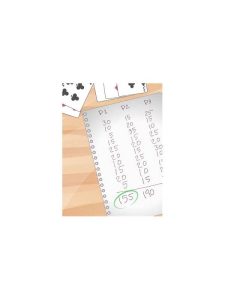
Record only the anchor, the primary route, the discard, and one reason. Long notes can distract from the actual decision. At the end of a week, compare the records. Are you consistently keeping pairs that never develop? Are you abandoning good anchors for attractive but narrow routes? Patterns in the notes can suggest a focused practice question for the next session.
This drill works with physical cards or a simple digital layout. Its value comes from repeated structure: build, label, compare, and discard. Over time, random cards feel less like noise because you have a practiced method for deciding which information deserves attention first.
Do not turn the drill into a contest against the clock. Accuracy of the explanation comes first. Once the sequence of checks is familiar, add a gentle time limit and see whether the same anchor remains visible. If speed causes you to ignore declaration requirements, remove the limit and rebuild the habit more slowly.