Rummy How-To: Practice With Random Hands
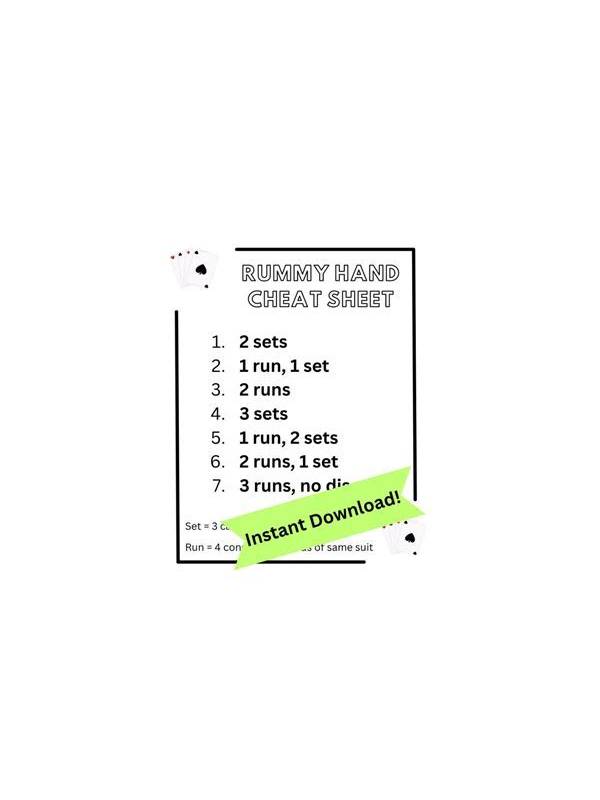
Random-hand practice is a useful way to improve recognition because it removes the comfort of familiar patterns. The objective is not to simulate a complete competitive table. It is to practice arranging cards, identifying requirements, and explaining a discard when the hand does not immediately suggest an answer.
Create a hand using a neutral random method that follows the format you want to study. Do not keep redrawing until the cards look interesting. The awkward hands are often the most useful because they reveal whether your process depends on a lucky opening structure. Record the initial hand before making any changes so that your review has a fixed starting point.
Give yourself a short first pass. Separate confirmed groups, developing routes, and loose cards. For every developing route, name the exact requirement. Then choose one discard candidate and explain why it has the weakest current role. You do not need to pretend that every unseen card has a known probability; simply compare the visible routes and their costs.
Add one simulated draw at a time. Place the new card aside, inspect its role, and reset your layout. If it improves a group, check whether the improvement is real under the rules. If it does not, leave it in the loose zone. After each draw, write whether your original plan stayed primary, became a backup, or was abandoned.
Use constraints to make the exercise focused. One round can emphasize low-risk discards; another can emphasize finding a required pure sequence; a third can ask you to keep the layout readable on a small screen. Change only one constraint at a time so you know which skill the exercise tested.
End with a brief review. Note the first point where your plan changed and whether the change came from evidence or impatience. Save examples of confusing hands, not just successful ones. Repeating them later shows whether your process improved. Random practice becomes valuable when it produces clear questions for the next session.
To increase difficulty, hide the next simulated card until you have stated your current plan. To reduce difficulty, allow a longer review and focus on naming groups correctly. Change difficulty gradually so the exercise measures reasoning rather than speed alone.
A notebook column for “plan,” “draw,” and “revision” is enough to make this exercise measurable.
Keep the entries brief so the practice stays focused on decisions.
One extra sentence about why the plan changed is enough.