Rummy How-To: Build a Personal Pre-Declaration Verification Script

The moment before a declaration is often compressed by excitement and time pressure. A pre-declaration script gives the mind a fixed order for checking the hand. It should be short enough to use consistently and specific enough to catch the errors that matter under the rules you are playing.
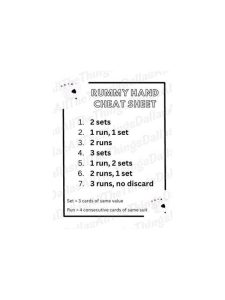
Start by writing the required conditions in plain language. Many Indian rummy formats require a particular number of sequences, including a pure sequence, but exact requirements vary by game and platform. Use the rulebook for the table you joined. Do not rely on memory from another variation. Put the conditions in a checklist that can be read without interpreting legal or promotional language.
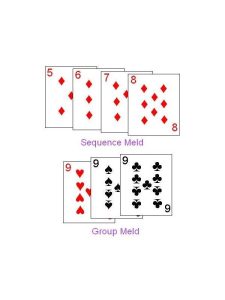
Next, verify each group from left to right or in another fixed order. Name the cards and the role of the group: pure sequence, impure sequence, set, or ungrouped. Look for a missing rank, a suit mismatch, a duplicated card that you mentally placed twice, and a joker used in a way the rules do not permit. A fixed order is more reliable than scanning the hand until it “looks right.”
Then check the leftovers. Every card should belong to a valid group, and no card should be silently ignored because the hand appears nearly complete. If one card is ungrouped, stop and solve that issue before submitting. Also verify that the app’s selected cards match the groups you intended to declare; small-screen interfaces can make a neighboring card easy to tap accidentally.
Add a final context check. Confirm the table’s declaration button, the current turn, and any confirmation screen. If the connection is unstable, avoid repeated taps. Read the result carefully and keep a screenshot only if it does not expose private account or payment details.
Practice the script with sample hands until it takes less than a minute. After a mistake, update the checklist to address the actual failure, not every imaginable problem. The goal is a dependable routine that protects attention at the most consequential moment. A script cannot guarantee a winning declaration, but it can reduce preventable structural and interface errors.
Keep a separate version for unfamiliar formats. The first line should always be “Which rules apply here?” Then list only the requirements confirmed by the current table. This prevents a familiar checklist from creating false confidence when the number of sequences, joker treatment, or declaration process differs from what you normally play carefully.