Rummy Guide: Use a Route Budget for Uncertain Cards
Some hands contain more possibilities than can be safely maintained. A route budget is a simple way to control that problem. It is the maximum number of uncertain cards or speculative plans you are willing to carry while waiting for information.
Start by separating confirmed progress from speculation. A completed sequence or a strong existing group does not need the same attention as a pair that still needs a specific card. Count only the uncertain pieces: loose cards, competing pairs, and routes that depend on one narrow arrival.
Choose a practical budget based on the hand’s stage. Early on, you may tolerate several uncertain cards because more draws remain. As the hand develops, lower the budget. If the hand still has too many speculative pieces after your review point, release the one with the weakest connection or highest penalty.
The budget is not a rigid number that guarantees success. It is a warning signal. When you exceed it, stop adding new ideas automatically. A new card may be useful, but it should replace a weaker route rather than enlarge the collection of hopes. This keeps the hand understandable.
Compare routes by support. A route supported by two existing cards and two possible connectors may deserve more budget than a pair waiting for a single exact rank. Also consider whether a card can switch routes. A flexible connector can remain useful even when one plan fails, while a narrow card may become dead weight quickly.
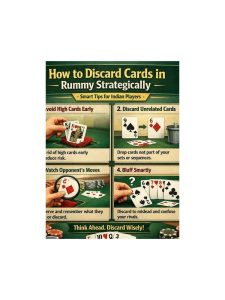
Use the discard decision to restore balance. If a draw creates a new opportunity, look for the least-supported old opportunity to remove. Do not preserve every route simply because it once looked promising. The hand improves when it becomes more coherent, not merely when it contains more possibilities.
Near the end of the hand, the budget should be very small. Ideally, unresolved cards have a clear reason to remain and a defined deadline. If a route cannot realistically finish, reduce its cost before it turns into a large penalty. A clean hand map is more valuable than a long list of theoretical draws.
Route budgeting turns vague uncertainty into a visible control. It helps you welcome useful information while resisting the urge to keep every attractive card. The goal is not to eliminate risk; it is to keep the amount of unresolved risk within a level you can evaluate.
If the budget feels hard to apply, begin with one rule: do not add a new speculative route unless you can name the old route it replaces. That single constraint often restores clarity immediately.