Rummy Guide: Turn a Scattered Hand Into Clear Groups
An untidy rummy hand can feel more difficult than it really is. Cards may appear to belong to several possible sequences, while one high card sits alone and a joker seems to invite too many choices. The answer is not to force a complete plan immediately. First, turn the scattered hand into a set of visible groups and unresolved questions.
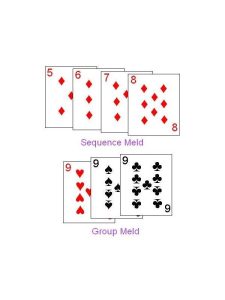
Start by sorting cards by suit, then mark obvious neighboring cards. A three and four of the same suit form a useful connection even if the next card is missing. Do the same with matching ranks across suits, since they may become a set. Keep these observations separate from completed melds. A possible group is a candidate, not a promise.
Next, label each card as committed, flexible, or isolated. A committed card already supports a strong sequence or set. A flexible card fits two credible routes. An isolated card has no current neighbor or matching rank. This simple vocabulary prevents you from treating every card as equally important. It also makes the weakest discard candidates easier to compare.
Now examine overlap. Suppose a six of hearts could join a five-six-seven sequence or support a set of sixes. Which route has more supporting cards? Which route needs fewer future draws? Keep the stronger route provisional and avoid building two groups around the same card. Overlap is often the hidden reason a hand refuses to become organized.
Finally, estimate the cost of waiting. A low-value isolated card may be harmless to retain for one turn, while an unsupported ten or face card creates more exposure if the hand ends unexpectedly. If a candidate group needs several precise cards, decide how long you will chase it before switching. A time limit turns hope into a controlled experiment.
This method does not guarantee a winning declaration. It gives you a readable hand, a smaller set of choices, and a reason for each discard. Reorganize after every meaningful draw, because the best group on one turn can become a weaker commitment on the next.
For practice, describe the hand aloud in one sentence before acting: “I have one reliable group, one flexible connector, and two exposed cards.” If you cannot summarize it, the structure may still be unclear. This pause separates what you know from what you hope to draw. Over several sessions, compare the summaries with your decisions and refine the labels that help you most.