Rummy Guide: Separate a Flexible Hand from a Crowded Hand
A rummy hand can look promising because several cards appear connected, yet appearances can be misleading. A flexible hand gives you more than one sensible route to a valid finish. A crowded hand contains many partial ideas but few combinations that can actually be completed. Learning to tell the difference helps you make calmer decisions after every draw.
Start by identifying the groups that are already close to completion. A same-suit run with one missing rank is a genuine project. A group of matching ranks with one missing suit may also be useful. Write these possibilities mentally, but do not count every imaginable connection. A card that could fit into six theoretical groups is not necessarily valuable if all six require unlikely draws.
Next, count independent routes. Suppose one card can join a near run, while two other cards can each support separate groups. That hand has choices. If every useful card depends on the same missing rank, the hand is less flexible than it looks. A good test is to ask, “If my preferred card never arrives, what is my second plan?” If you have no answer, you are carrying a crowded hand.
Watch for overlap. A middle card may belong to several possible runs, but using it in one group can destroy the others. This is not automatically bad; committing is often necessary. The important point is to recognize the cost. Keep overlapping cards only while they support a realistic plan, then release one when the hand becomes clearer.
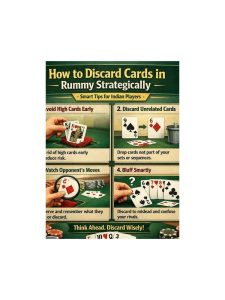
High cards deserve a separate check. A flexible high card can complete a useful group quickly, but an isolated high card often adds risk. Do not keep it merely because it has many possible neighbors. Compare its practical value with the points you would expose if the round ended soon.
Finally, review the hand after each meaningful draw. Flexibility is temporary. A new card may create a clean sequence, make an old card redundant, or reveal that two projects compete for the same space. Re-sort the hand and name your best route, backup route, and weakest card. This short habit turns a confusing collection into a series of manageable choices. One useful review question is whether your hand became clearer over time. If every new card creates more possibilities but no completed group, the issue may be over-collecting. Prefer a route you can describe and test. Flexibility is valuable when it leads to action; otherwise it is only a crowded collection of hopes.