
Rummy Guide: Make a Discard Heat Map
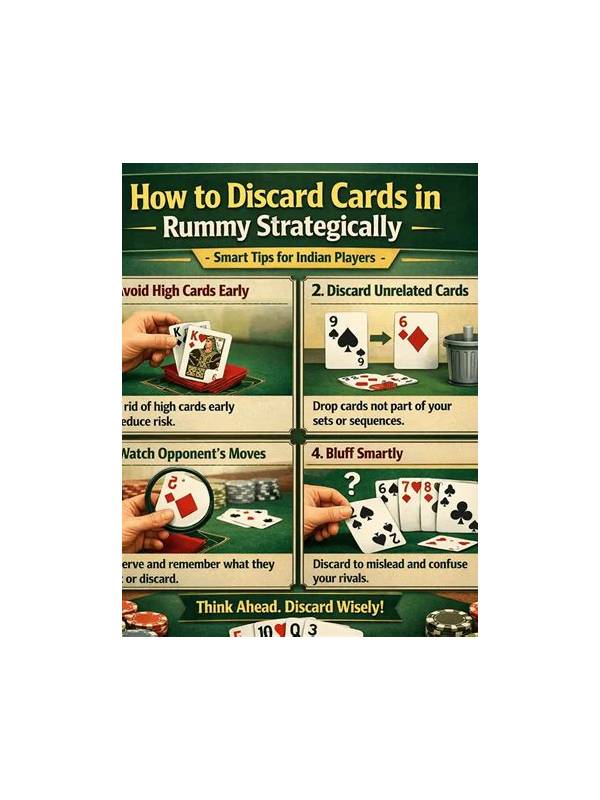
A discard heat map is a review tool that shows where visible discards have clustered. It does not predict another player’s hand, and it should never be treated as proof that a card is safe. Its value is descriptive: it helps a player notice which ranks or suits have already appeared in the open information.
To make one, draw a small grid with suits on one side and rank ranges across the top, or use a note-taking tool that does not expose private data. Mark a light dot for an early discard and a darker dot for repeated or recent discards. Keep separate marks for your own discards and the table’s public discards if the distinction matters.
Choose a short time horizon for the map. A map of the current hand is easier to interpret than a record carried across many unrelated rounds. Reset it when the deal changes. If the table has multiple decks or unusual discard rules, write that context at the top so ordinary assumptions do not slip into the exercise.
Read the map carefully. A cluster may mean that those cards were unattractive to visible players, but it may also reflect the deal, a format rule, or chance. A blank area does not mean its cards are available. It only means that no relevant card has been observed in the record.
Use the map to ask better questions. If a planned sequence depends on ranks that have appeared repeatedly, how many alternative routes remain? If a suit has many visible cards, is your current plan actually flexible or merely familiar? If the map is too sparse to support a conclusion, stop interpreting it and return to your hand structure.
Keep the map lightweight. Update it at natural pauses rather than during every fast turn. At the end of a hand, discard the map or archive it only for a clearly defined practice exercise. Long records can create false confidence and distract from the legal rules of the format.
The heat map is most useful when paired with uncertainty labels. Mark “observed,” “inferred,” and “unknown” separately. This keeps public information separate from imagination and makes the review honest. The goal is disciplined observation, not card-reading certainty. If you compare maps across practice hands, use the same notation each time. A heat map should support a question such as “which routes became less attractive?” It should not become a scorecard for opponents. Delete any note that invites you to identify private information or make a claim beyond the visible record.


