Rummy FAQ: Can a Joker Replace Any Card in a Sequence?
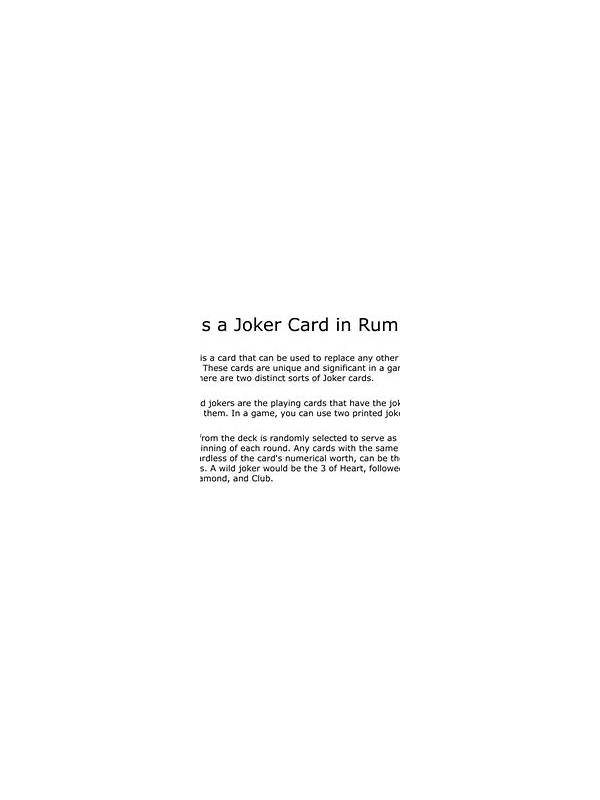
A joker can often substitute for a missing card in a rummy group, but the exact permission depends on the variant and platform rules. Some tables distinguish printed jokers from wild jokers, while others restrict how a joker may be used in a pure or impure sequence. Read the active rules before relying on a particular arrangement.
The most important distinction is between a pure sequence and a joker-assisted group. In many Indian rummy formats, a valid declaration requires at least one pure sequence, meaning a consecutive same-suit group with no joker substituting for a missing rank. A joker may help complete another sequence or a set, but it cannot usually turn a broken group into the required pure sequence.
Consider a simple example: five, six, and seven of the same suit already form a pure sequence. A joker added to the group may be unnecessary and could be more valuable elsewhere. By contrast, five and seven with a joker between them may form an impure sequence where the rules permit substitution. The visual appearance is not enough; the rule definition controls validity.
Jokers also have an opportunity cost. Holding one can keep several plans alive, but it may encourage you to preserve weak cards around it. Ask whether the joker is doing useful work now or merely supporting a pair that has little chance of growing. Sometimes the best use is to complete a set; sometimes it is to remove a high-value card from an unfinished group.
Before declaring, inspect each group separately. Identify the actual ranks represented by jokers, confirm that suits and ranks are allowed, and check the required number of sequences. Do not assume that an arrangement accepted by a home game will be accepted by an app or another regional variant.
If the interface shows a validation warning, stop and read it rather than repeatedly submitting. For practice, deal sample hands and label each group as pure, joker-assisted, or incomplete. This builds the habit of checking the legal structure, not just the number of cards that appear to fit. A joker is flexible, but flexibility works only inside the rules of the format you chose.
Rules may also explain how an unused joker is scored and how many cards a group needs. Keep those scoring details separate from the substitution question. A hand can contain a useful joker and still be invalid if the required pure sequence or group count is missing.