Rummy Comparison: Risky High Cards Versus Safe Flexible Cards
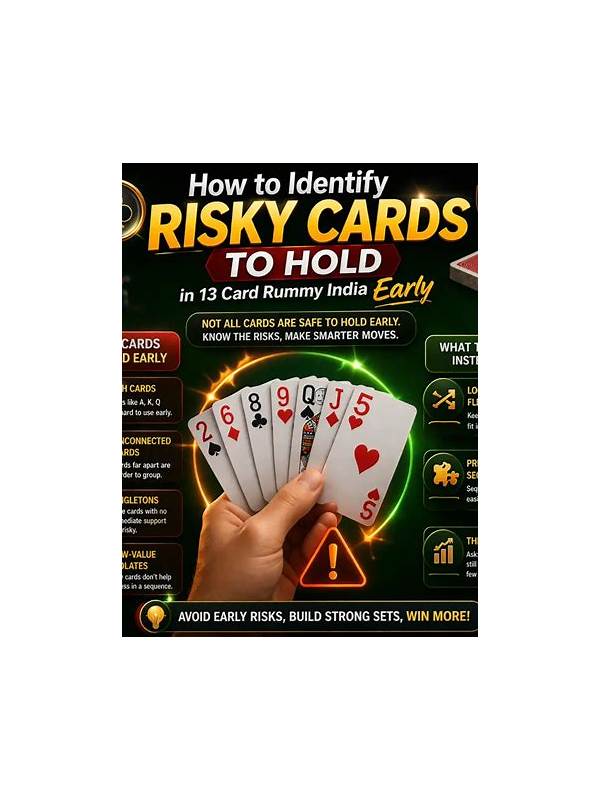
When choosing between a high card and a flexible lower card, the answer is rarely automatic. The high card creates more point exposure if the hand ends unfinished, while the lower card may be the key to a sequence. Compare their roles rather than using a fixed discard order.
Start with completion probability. A high card that belongs to a near-complete group may be worth retaining because one of several draws can finish it. A low card that is isolated may offer no such route. On the other hand, a flexible low card can sometimes connect in two directions and remain useful longer than a narrow high card.
Then examine the clock. Early in the hand, future flexibility has time to produce value. Later, the cost of holding a high card rises because fewer draws remain. A card that was reasonable to keep on turn two may become the best discard on turn eight, even if its structure has not changed.
Information changes the comparison. Check which connecting cards are visible and whether another player appears to be collecting the same area. Avoid treating a live-looking card as flexible when all of its useful neighbors have already appeared. The discard pile can turn a theoretical option into a dead one.
If the high card is part of your only legal sequence, protect it until you have a replacement. If legality is secure, point reduction deserves more weight. A quick note with three labels—legal role, improvement routes, endgame cost—can make the comparison clear in seconds.
The practical lesson is balance. Flexible cards buy time, while high cards demand a plan. Keep a high card only when its contribution is concrete, and discard a low card when it is merely occupying space. Good decisions follow changing evidence rather than a permanent ranking of card values.
Make the comparison again after every meaningful draw. A new card can turn a high card into a necessary connector or make a flexible low card redundant. If both candidates remain close, prefer the option that leaves a clear next action. Clarity has practical value under a timer because it lowers the chance of a rushed, inconsistent discard.
Remember that a high card can be safe when it is already part of a complete group, while a low card can be risky when it is the only card preventing a broken sequence. Mark the role of each candidate before comparing points. This single step often resolves an apparent tie without requiring a complicated calculation.