Rummy Comparison: Early Discard Signals and Late Discard Signals
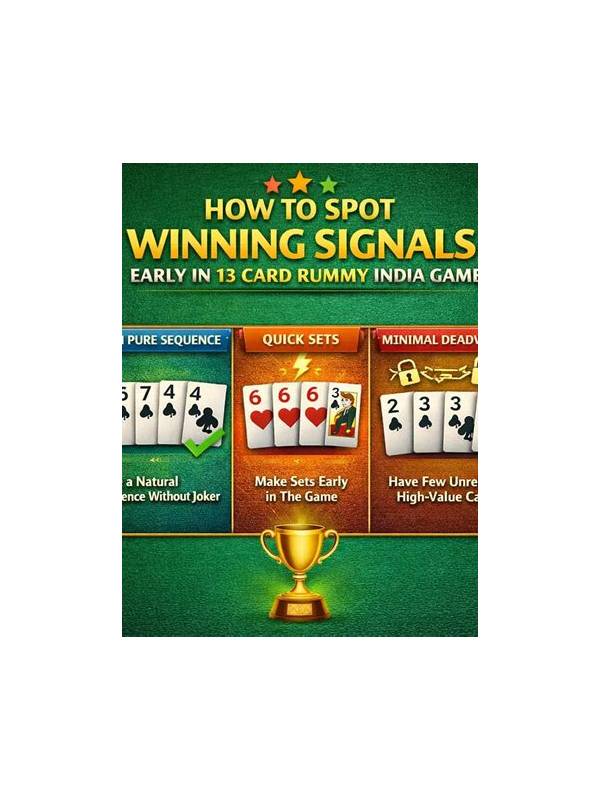
Discard information changes as a rummy hand develops. Early in the hand, players have many possible arrangements, so a discard usually says only that one card was less useful than the rest. Later, the same kind of discard may carry more context because fewer cards remain ungrouped. Comparing the two stages helps you avoid overreacting to a single signal.
Early discards are mainly about broad shape. A player may release a high card, a duplicate, or a card far from the combinations they are exploring. Since the opening hand contains many alternatives, it is safer to treat early discards as weak evidence. Use them to notice obvious patterns, such as a suit being repeatedly ignored, but keep your own routes flexible.
Late discards deserve closer attention because a player has had more time to narrow choices. A card discarded after several turns may indicate that it failed a route, became redundant, or is being sacrificed for a safer hand. Even then, it is not proof. A late discard can also be forced by the draw or by a rule that limits a player’s options.
The practical difference is your response. With an early signal, prioritize your hand’s structure and avoid changing direction solely to block a card. With a late signal, check whether your next draw would give an opponent a particularly useful connector. If the cost to you is small, a safer discard can be reasonable; if it damages your required sequence, keep your own objective in view.
Use a two-column review after practice. In the first column, list what was visible when the discard occurred. In the second, write what you inferred. If the inference contains words such as “definitely” or “must,” soften it to “possibly” unless the rules make it certain. This simple language check improves judgment.
The goal is not to decode every opponent. It is to assign the right confidence to information at the right time. Early discards help you observe broad tendencies. Late discards can refine a decision, but they still need to be weighed against your hand’s value, the remaining routes, and the cost of losing a turn. Remember that the discard pile is a record of choices, not a transparent hand. A player may hold a card for one turn and release it after a new draw changes the arrangement. That change can explain a late signal without implying a long-term plan. When reviewing, mark the point at which your information changed and avoid carrying an old interpretation forward unchanged. This habit is especially useful in games with jokers or multiple decks, where the same visible card may have more than one possible role.