Rummy Comparison: Early Meld Commitment Versus Delayed Commitment
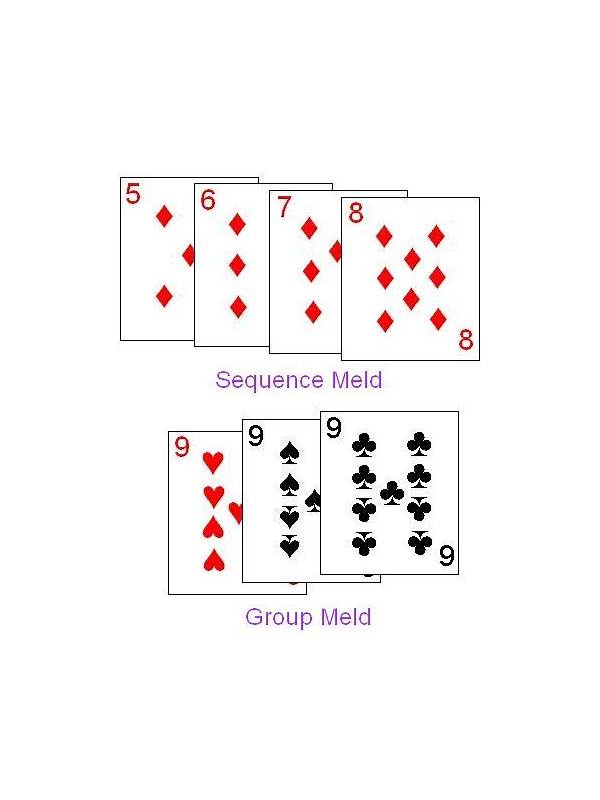
An early meld commitment means arranging a promising group as soon as its structure is reasonably clear. A delayed commitment means keeping cards less visibly organized while waiting for more evidence. Neither approach is always superior. The better choice depends on how complete the group is, how expensive the loose cards are, and how many useful alternatives remain.
Early commitment has a clarity advantage. Once a sequence or set is firmly identified, you can see which cards are spare and which draws matter. This reduces mental clutter and can make the next discard easier. It is particularly helpful when the hand contains high-value unmatched cards that should not be protected without a strong reason. A clear group can also reveal that another promising pair is less important than it first appeared.
The cost is reduced flexibility. A group that looks complete may use a card that could serve two better routes. A premature arrangement can make you overlook a stronger sequence or hold a weak card simply because it has been assigned a job. Commitment is risky when it depends on one narrow draw, when the relevant cards are already visible elsewhere, or when moving the group would create expensive leftovers.
Delayed commitment preserves options. You can compare several possible arrangements and wait for information from the draw and discard piles. This is useful for flexible middle cards and hands with overlapping routes. The danger is holding too many loose cards for too long. If every card remains “potentially useful,” no card receives a realistic evaluation, and the hand may become harder to reduce.
Use a two-part test. First, ask whether the proposed meld has a clear identity: can you explain the group without several assumptions? Second, ask whether committing it improves the next discard. If both answers are yes, early commitment may be efficient. If the group is still a story rather than a structure, delay while setting a deadline for review. Do not delay indefinitely.
After each hand, note one commitment that helped and one that arrived too early. Judge them by the information available at the time, not by the final result. The comparison is not about playing openly or secretly. It is about spending flexibility deliberately and keeping the hand understandable as new cards appear.
The comparison also depends on the rules of the format and the number of players. A group that is safe to hold in a slow practice round may be too costly when turns are limited. Learn the local rules first, then apply the commitment test within that setting. Strategy becomes clearer when the rules and assumptions are explicit.