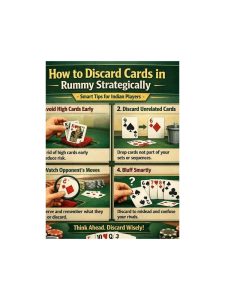
Rummy Comparison: Drawing for Completion Versus Reducing Exposure

A rummy hand can offer an attractive completion draw while also containing cards that would be costly if the hand ends soon. The choice is not simply hopeful play versus cautious play. Compare how close the completion is, what the remaining cards expose, and how much time the format gives you to recover.
First describe the completion route precisely. Which card would finish it? Are there several useful cards, or only one exact rank and suit? A route requiring one of several cards is more flexible than a route requiring a single unseen card. Also check whether completing one group leaves another group unfinished. A local improvement is not a complete solution if it creates a new problem elsewhere.
Then calculate exposure in practical terms. An isolated high card may add more points if you lose, while several low cards may be easier to repair but still take time. A pair can look safe but remain unfinished. List the cards that have no credible role and consider whether releasing one now improves the overall hand, even if it gives up a speculative completion chance.
Timing and table information matter. Early in a hand, a strong completion route may deserve a test. Late in a hand, reducing exposure can be more important when the route is narrow. A visible discard may also change the risk of releasing a connected card, though it cannot tell you exactly what opponents hold.
Make the comparison explicit: “This draw improves a near-complete group, while this discard removes an isolated high card.” If the completion route is broad and the exposure is modest, pursue the improvement. If the route is narrow and the exposure is large, simplify. This method keeps the decision tied to the actual hand instead of a blanket preference for bold or safe play. If you cannot decide, use a short timeout rather than adding imagined outcomes. State what each candidate discard accomplishes, then select the one with the clearer route. Review it against the information available at the time, not cards that appeared later. This distinction keeps comparison honest and helps you build a repeatable approach to uncertain draws. The comparison is especially useful when both candidates are imperfect. There may be no safe option, only a choice between two costs. Naming those costs makes the decision honest and gives the later review something specific to examine. That clarity is valuable even when the result is negative. You can decide whether the route was too narrow, the exposure too high, or the timing too late, then adjust one factor in future practice.