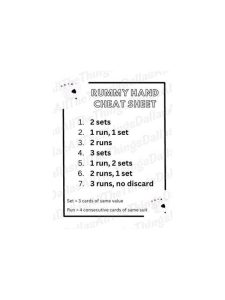
Rummy Comparison: Discarding for Clarity Versus Discarding for Speed
Discarding for speed means choosing a card quickly so the turn continues. Discarding for clarity means using the discard to make the remaining hand easier to read and manage. Neither approach is always superior. The right balance depends on the number of viable routes, the table pace, and the consequences of a mistake.
Speed is useful when the card is obviously isolated, the hand structure is stable, and the rules or interface impose a short timer. A quick discard can prevent last-second errors and keep attention on the next player. It is also valuable in a practice drill designed to test recognition rather than deep analysis. The danger is that speed can become a habit even when the choice is not obvious.
Clarity is valuable when several cards seem related but only one route is realistic. A clarity-focused discard may remove a duplicate high card, separate two conflicting plans, or expose which connector is truly needed. It can leave fewer cards, but fewer cards are not the same as a better hand. The purpose is to reduce uncertainty, not simply to reduce count.
Compare the approaches using three costs. The first is error cost: how damaging is a rushed mistake? The second is delay cost: how much time or attention does deeper thought consume? The third is information cost: does the discard reveal a useful pattern or accidentally give another player a convenient card? In a stable opening, speed may win. In a tangled middle game, clarity often has greater value.
A practical routine is “scan, classify, commit.” Scan the hand once for obvious risks. Classify the choice as clear or contested. If it is clear, discard promptly. If it is contested, spend one additional pause comparing the two strongest candidates by future use and replacement difficulty. Then commit without reopening the entire analysis.
Review the result by process, not only outcome. A fast discard that happened to work may still have been poorly justified. A clarity-focused discard that did not lead to a win may have improved the hand’s structure. The goal is a repeatable decision speed matched to uncertainty: quick when the evidence is strong, deliberate when the structure is not.
The distinction is also useful when reviewing a rushed session. Mark each contested discard as either a speed choice or a clarity choice, then check whether the chosen mode matched the situation. A mismatch is more useful than a simple win-or-loss label. Over time, this builds an instinct for when an extra pause is worth its cost.