Rummy Comparison: One Completed Group or Two Open Routes
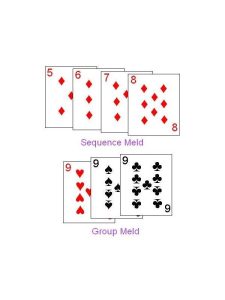
A completed group gives certainty, while two open routes give choice. Neither is always better. The right comparison depends on whether the completed group is strong and whether the open routes can share cards without creating a crowded hand. Looking at dependency and leftover risk makes this decision more practical.
Begin with the completed group. Is it legal under the current variant? Is it a pure sequence or another high-priority requirement? Does it use a card that is also the only bridge to a promising route? A reliable group that satisfies a key rule often deserves protection. A weak group built by forcing a card away from a better plan may not.
Now list the two open routes. For each, record the exact cards that would improve it, the cards it shares with the other route, and the likely discard if it fails. Shared cards can be efficient, but they can also create a hidden dependency: one draw may improve both plans on paper while the next decision can support only one. If the routes are independent and broad, preserving them may be valuable. If both depend on the same narrow target, they are really one fragile route.
Compare the leftover hand after each choice. A completed group should leave fewer isolated cards and a manageable next discard. Two open routes should not leave a high-penalty card with no exit. Ask which option still looks acceptable after one miss. This “miss test” is often more useful than imagining the perfect draw.
Finally, consider pace and score pressure. In a fast table, a simple secure structure may prevent errors. In a slower practice hand, preserving options can teach more about route quality. The comparison is not a universal rule. It is a way to see whether certainty is buying real progress or whether flexibility is merely postponing a necessary decision. Keep the comparison local to the current hand. Do not assume that a choice that worked in a previous round deserves the same priority now. The score position, number of players, visible discards, and time remaining can alter the value of certainty. A small written comparison is often enough to expose which factor is actually driving your choice. In a practice round, say the reason for the choice in one sentence before moving on. This makes the idea testable and keeps the review anchored to evidence. If the hand changes, update the sentence instead of defending the old plan. The cards will still contain uncertainty, but the decision will have a clear basis. A short routine also works for beginners because it focuses attention on one visible trade-off at a time. After several rounds, compare the sentences and note which assumptions were consistently useful, which were too narrow, and which caused unnecessary delay. That comparison can guide a focused drill for the next session.