
Indian Rummy Tips: Track What the Discard Pile Cannot Tell You
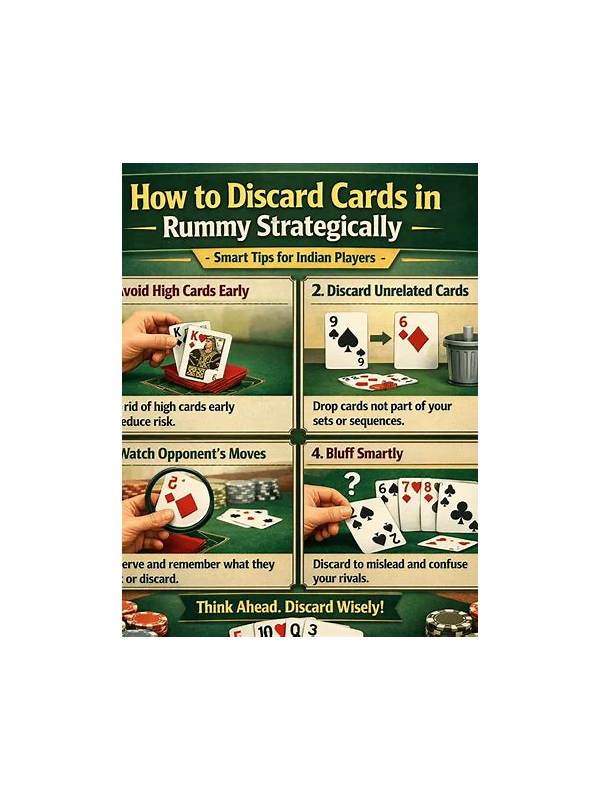
The discard pile is useful, but it is incomplete evidence. It shows what has been released, not every card that was considered, held, or passed over. Treating the pile as a full map of opponents’ hands leads to overconfident reads and unnecessary fear.
Start with what the pile confirms. A visible card is no longer available from the draw source in the same way, depending on the format. Repeated ranks and suits can show which natural routes are becoming less likely for you. The pile can also reveal that a player declined a card you expected to be attractive, although even that observation has several explanations.
Next, list what it cannot confirm. You do not know whether an opponent already holds a neighboring card, whether a discarded card was drawn recently, or whether a player rejected it because it was useless or because it would reveal their plan. The absence of a card from the pile does not prove that it remains available to you.
Use ranges instead of declarations. Say, “This player may be interested in middle diamonds,” rather than, “They definitely need diamonds.” A range lets you respond to new evidence. If they release a related card, lower the confidence in your first theory. If they repeatedly take connected cards, raise it, but keep the conclusion proportional to the evidence.
Do not sacrifice your own structure to block every imagined route. Compare a defensive discard with your hand’s actual needs. If holding a card preserves a real sequence and the opponent signal is weak, keeping it may be sensible. If the card is isolated and expensive, release it while accepting that no discard is risk-free.
After the round, review your strongest prediction and its evidence. Was it based on one choice or a pattern? Did you ignore an alternative explanation? This exercise turns the discard pile into a source of calibrated information rather than a device for creating certainty where none exists. You can also track information that becomes less useful over time. A single early pickup may be hard to interpret after many turns, while a pattern near the end of a hand may deserve more attention because fewer cards remain. Avoid treating all observations as equally strong. Give greater weight to repeated, recent, and structurally connected actions, but continue to protect your own hand when the defensive response would be expensive. The same caution applies to cards that disappear from view. Their absence may reflect a hidden hand, a different format action, or simple timing. Treat availability as a changing estimate rather than a promise. This prevents the discard pile from making you overconfident about a route that was never guaranteed.


