
Rummy How-To: Use a Discard Candidate Ladder
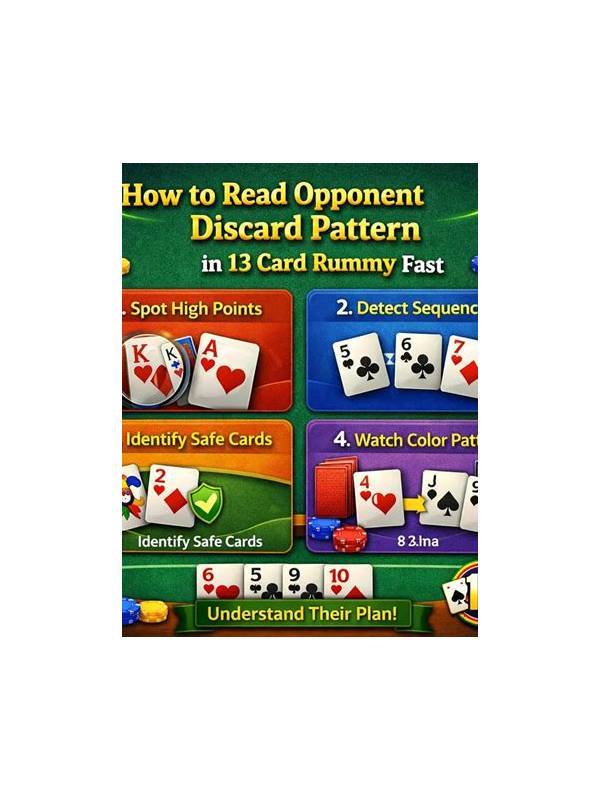
A discard candidate ladder is a short ranking rather than a single first impression. It helps when several cards look imperfect and the best choice depends on more than points. The ladder should be rebuilt after a meaningful draw because the role of each card can change.
Place completed-group cards at the protected end unless a rule-specific reason changes the situation. Next place cards that support a required natural sequence or two realistic routes. These cards are not untouchable, but releasing them needs evidence. In the middle, place cards with one plausible route or a moderate point cost. At the release end, place isolated cards, duplicate ideas with no support, and cards whose only value comes from a route that has expired.
Before discarding, compare the top two candidates at the release end. Ask which one creates more replacement work, which one leaves a safer fallback, and which one reveals useful information without giving away a strong route. If one candidate has a much higher point cost but the other is the only connector in the hand, the ladder makes the trade-off visible.
Do not make the ladder too detailed. Four levels are usually enough: protect, support, uncertain, release. A long numerical ranking can create false precision. The purpose is to reduce a thirteen-card hand to a small comparison and then act within the turn limit.
Record one ladder decision during practice. After the hand, check whether the released card truly had fewer roles than the alternative. If not, identify the missing fact: perhaps a suit was misread, a group was counted twice, or a route should have expired earlier. This review improves the categories without turning the exercise into hindsight criticism.
The ladder is a decision aid, not a promise of the best outcome. It combines visible structure with practical risk. Used consistently, it makes discards more deliberate and reduces the temptation to choose the first card that merely looks inconvenient. The ladder can be mental, written, or represented by card positions. Choose the version that does not slow the turn. In a digital game, an internal order may be enough: protect the rule, preserve the connector, release the isolated card. If the hand is complex, writing four labels during practice trains the same order without depending on perfect memory. The ladder is most useful when candidates are close. If one card is clearly isolated and another clearly completes a required group, no elaborate ranking is necessary. Save the deeper comparison for moments of genuine uncertainty. This keeps the aid efficient and prevents labels from becoming another source of distraction during a quick turn.


