Rummy FAQ: Why Does a Balanced Hand Still Stall?
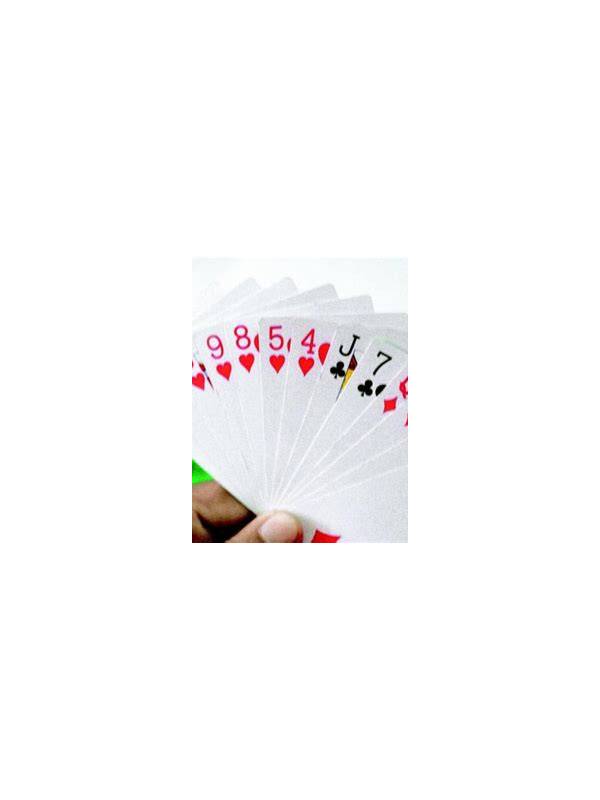
Balance is appealing in a rummy hand. Similar numbers of cards across suits can make the layout look orderly, but visual balance does not guarantee progress. A balanced hand may stall when several groups rely on one unavailable or unlikely card.
Check for shared dependency. If two promising sequences both need the same rank, they are not two independent routes. They are one bottleneck presented twice. Mark the missing link and ask how many alternative cards could repair either group. A hand with four attractive fragments may have fewer practical options than a messier hand with two unrelated one-step routes.
Check for role conflict as well. A card can appear to support a sequence and a set, but using it in one group may destroy the other. Count each card only once when testing a full arrangement. A balanced spread of cards is not useful if the groups cannot coexist legally.
Finally, check timing. Early in a hand, a balanced layout may deserve a little room to develop. Later, the same layout may be too slow if it still needs several precise draws. Give narrow plans a deadline. If the deadline passes, release the group that depends on the most specific event and protect the route with broader support.
Use a simple diagnosis: count independent routes, count shared bottlenecks, and count cards with no current job. The hand is improving when independent routes increase or when a bottleneck is removed. It is stalling when the same missing link remains central while loose cards accumulate.
Do not respond by forcing a dramatic rearrangement. Make the smallest change that removes one dependency, then review the hand again. A balanced hand can become stronger through one careful discard, and an unbalanced hand can be healthy if its connections are independent. The real question is not whether the cards look evenly distributed; it is whether they offer several legal ways to improve.
Review this diagnosis after a hand ends, but do not rewrite the past using the result. A balanced hand may stall because the missing cards never arrived, even though the original plan was reasonable. Conversely, an apparently unbalanced hand may succeed through an unexpected draw. Record the number of independent routes at the moment of the decision. That measurement gives a fairer lesson than the final score alone.
You can sketch routes as separate lines on paper. Cross out a line when it shares a bottleneck with another line, and circle a line that can be completed in more than one way. The picture makes hidden dependence visible without requiring detailed probability estimates. It is particularly helpful for beginners who confuse the number of attractive fragments with the number of independent plans available.