Rummy FAQ: When Does a Temporary Group Become a Trap?

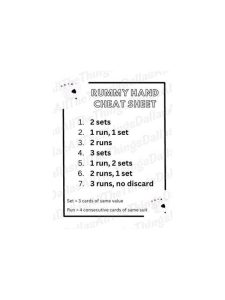
A set can look reassuring because it gathers cards into a neat group. Yet a group is not automatically valuable simply because it is complete or nearly complete. It becomes a trap when it encourages you to hold expensive or inflexible cards while the rest of the hand loses shape.
Start by checking the rules of the variant. A valid set may have limits on duplicate ranks, suits, or wildcards. A group that appears complete under one rule set may not be usable under another. Confirm legality before measuring strategy. A structurally invalid group is not an asset.
Next, look at opportunity cost. Which cards are being protected because of the set? If keeping the set forces you to retain a high card, blocks a natural sequence, or consumes a joker that could repair a weaker section, its apparent value may be lower than it seems. Compare the group with the best alternative arrangement, not with an empty hand.
Time matters too. Early, a nearly complete set may be a reasonable anchor if several cards can improve it and the rest of the hand remains flexible. Late, the same group may be a trap if it needs one exact card and leaves no time to recover. Ask how many useful cards remain in the route and how many turns you can afford to wait.
There is no need to destroy every questionable set immediately. Give it a clear status: confirmed, developing, or conditional. A conditional set must earn continued protection by receiving evidence or preserving a low-cost alternative. If it fails the test, release the card that causes the greatest damage elsewhere.
During review, note what made the set attractive and what it concealed. This helps distinguish genuine structure from visual comfort. A good set supports the whole hand. A trap asks the whole hand to support it.
The same test applies to a group that was completed earlier. Completion is evidence, but it does not remove opportunity cost. Keep checking whether the group still fits the hand you have now, especially after a new card changes the best arrangement.
This prevents visual neatness from replacing current evidence.
When in doubt, compare the group with a simpler arrangement and choose the one that leaves more legal, low-cost options.