Comparing Rummy Practice Modes for Different Skills
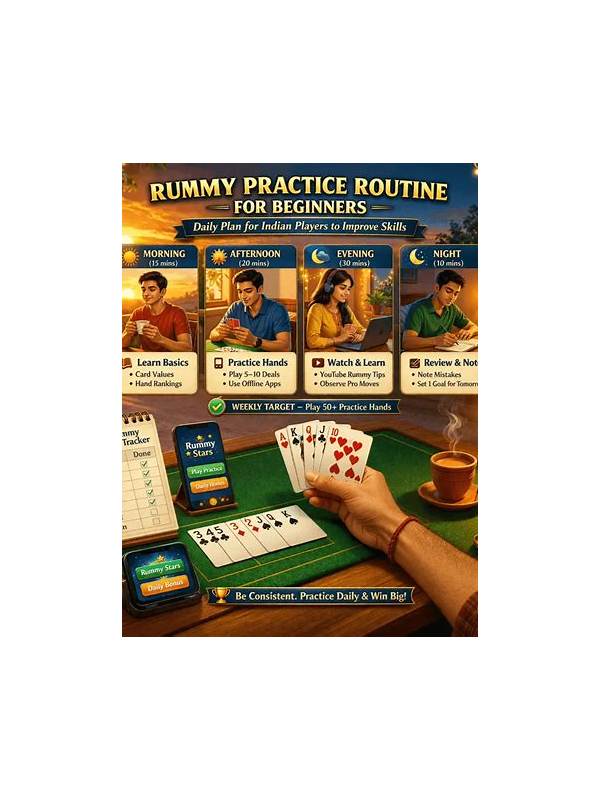
Practice is more effective when the format matches the problem. Repeating full games can be enjoyable, but it may hide whether you are improving sorting, discard judgment, observation, or end-of-hand verification. Choose a mode by the skill you want to isolate, and use money-free practice whenever possible.
For hand organization, use a slow format or deal sample hands away from a live table. Sort each hand into confirmed groups, candidates, and isolated cards. Explain why every card belongs in its zone, then check whether the arrangement satisfies the rules. This builds visual discipline without the pressure of a countdown.
For discard decisions, create a simple scenario with a few visible cards and compare two candidate discards. Write the benefit and risk of each before looking at the next card. The exercise is not about predicting the winner. It is about making the reasoning visible and noticing when you rely on rank alone.
For observation, practice tracking only one opponent clue at a time, such as open-pile pickups. At the end of a hand, compare your hypothesis with the revealed information. If you try to remember everything, you may remember a story rather than evidence. Narrow tracking gives cleaner feedback.
For declarations, use a checklist and inspect the hand from the beginning. Name every sequence and set, confirm the required pure group, and make sure each card appears once. This is a separate skill from building combinations quickly. A player can improve one while neglecting the other.
Finally, use full games to combine skills and test time management. Set a session limit, take notes on one experiment, and stop when the limit arrives. Practice should reveal a repeatable process, not encourage endless play. Pick one target per session, review the result neutrally, and change the exercise only after you understand what it measured.
A focused session can be short and still produce useful evidence. Stop when the exercise has answered its question, then record what you observed before changing formats.
If a practice mode is competitive or time-limited, keep the stakes appropriate to your goal. A high-pressure setting may measure reaction speed and emotion control more than hand reading. That can be useful later, but it is a poor first exercise for learning the rules. Rotate deliberately: isolate one skill, combine it in a complete hand, and then review the notes. This progression makes practice purposeful without requiring a long session.