Rummy How-To: Review the Open Deck Before Drawing
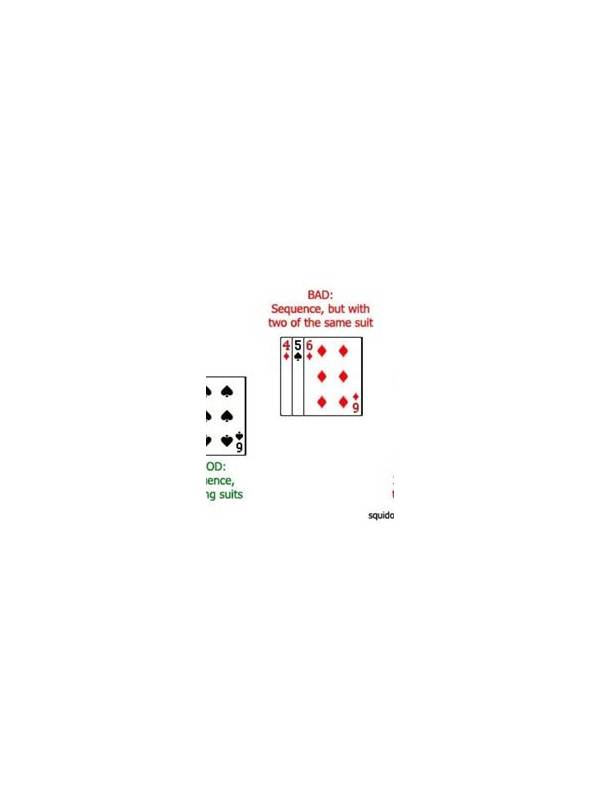
The open discard pile is useful because it shows what someone has released, but it can also become a source of overconfidence. A player may see one attractive card and immediately assume it is the answer. A better approach is to review the pile briefly, identify what the visible card would do, and then compare that benefit with the cost of revealing your interest.
Begin with the top card. Ask whether it completes a valid sequence, strengthens a set, or merely forms an appealing pair. A card that completes a pure sequence usually has a clearer role than a card that only creates another possibility. Then inspect the nearby visible cards for context. Repeated discards of a suit or rank can suggest that those cards are less useful to the visible players, but the pattern is evidence, not proof. Players may be following different plans or simply clearing high points.
Before taking the card, check your hand in a fixed order. First, locate the group it would join. Second, decide which card you would discard after taking it. Third, check whether the new group uses a card that currently supports another route. This prevents the open pile from dictating a move before you understand the full exchange.
Also consider information. Taking a conspicuous card may tell opponents that a suit or rank matters to you. That does not mean you should avoid every useful discard. It means the card should provide enough structural improvement to justify the signal. If two cards offer similar value, a less revealing route may be more comfortable, especially late in the hand.
A practical review takes only a few seconds: “What does it complete? What does it replace? What does it reveal?” If you cannot answer all three, drawing from the closed pile may be the more disciplined choice. The closed pile offers less information, but it also avoids building a plan around a single visible temptation.
After the hand, record one open-deck decision and whether your reasoning was sound before the result was known. Do not mark the choice correct merely because the card later helped an opponent, and do not mark it wrong because the closed draw was lucky. Judge whether the card improved your route, preserved a backup, and fit the rules. This keeps open-pile reading analytical rather than superstitious.
Keep the review independent of table mythology. A card is not due because its neighbors appeared, and a discarded card is not safe merely because another player released it. Use the pile to improve your description of the hand, then make the choice from the groups and rules actually in front of you.