Rummy Strategy: Test a Card Before Calling It Safe
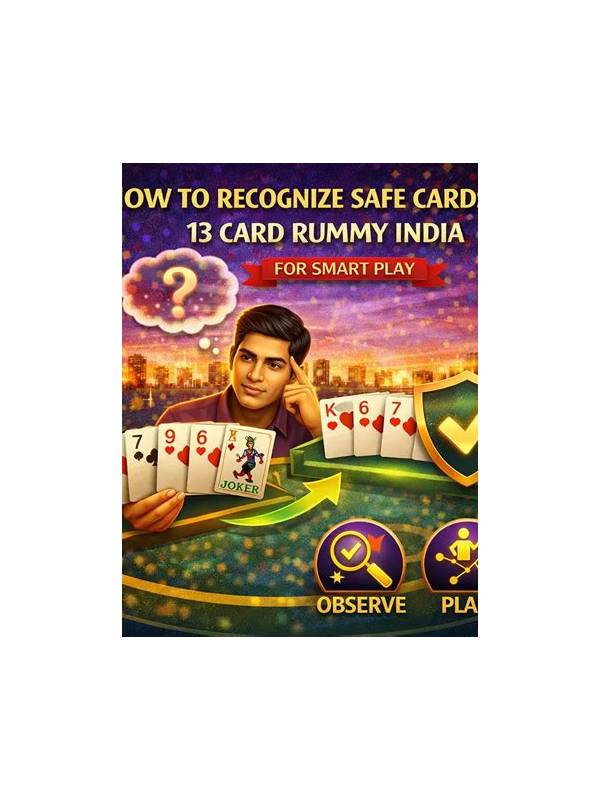
Why “safe” can be misleading
In rummy, players often describe a card as safe because it seems to fit somewhere. It may sit beside a connector, belong to a promising suit, or complete a pair. That description is only a starting point. A card is useful when it supports a realistic route to a valid hand while leaving reasonable alternatives if the next draw disappoints. A familiar card can still consume space without improving the hand.
Before keeping a card, ask what it does immediately and what it could do later. Immediate value means it already forms part of a legal group. Future value means it can join more than one plausible group with cards that are not excessively unlikely. If the only attractive completion is one exact card, the hold is fragile even if the picture looks neat.
Use a three-part test
First, name the card’s current role: completed group, near sequence, pair, or isolated card. Second, list its useful neighbours or matching ranks. Third, identify a fallback if the needed card does not appear. For example, a middle card may connect to either side, while an edge card may have only one direction. A pair may offer a set route, but it may also be dead weight if the same rank is needed elsewhere.
This test does not require probability tables. It simply separates a card’s visible appearance from its options. Count options honestly. A card that supports two complete plans is stronger than one that supports one attractive plan and one theoretical plan requiring several perfect draws.
Reassess after every meaningful draw
New cards change the value of old cards. When a draw completes a group, review the remaining loose cards instead of automatically protecting the newest combination. A card that was useful as a bridge may now be redundant. Conversely, a previously awkward card may become the best anchor for the next sequence.
The aim is not to predict the entire deal. It is to avoid giving a permanent label to a temporary idea. Keep a short note such as “two routes, one fallback” or “one route, high repair cost.” Those descriptions are easier to update than emotional labels like lucky, unlucky, or safe.
A final decision rule
Keep a card when it has a clear present role, at least one credible continuation, and a manageable fallback. Discard it when its value depends on one narrow hope and it blocks a stronger, more flexible group. This rule will not make every hand successful, but it makes each choice explainable. That is the useful habit: judge the card by the quality of its options, then be willing to change your judgment when the hand changes.