Rummy Tips: Read Discard Timing Without Guessing
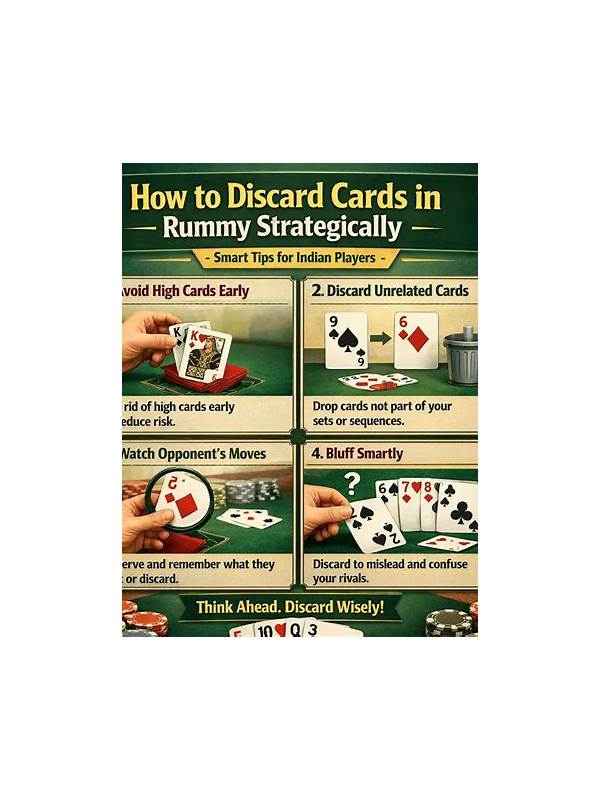
Discard timing can add context to a rummy hand, but it should never become a license to invent a story about another player. A card that appears late may be meaningful, or it may simply be the result of a changing hand. The useful habit is to observe timing alongside the card itself and the visible sequence of plays.
Start by recording three details: what was discarded, when it was discarded, and whether the player had just drawn from the open pile. An immediate discard after taking a card can suggest that the player changed direction, but it does not prove the rejected card was useless. A card discarded after several quiet turns may be more informative because the player had time to reconsider it.
Next, compare the discard with cards already visible. If several neighboring cards of one suit have appeared, another card in that neighborhood may be less valuable to track. If the same rank has been collected by multiple players, the timing is harder to interpret. Context prevents a single event from receiving too much weight.
Use a two-column mental note: evidence and assumption. “Player took a seven and discarded a queen” is evidence. “The player is building a seven sequence” is an assumption. Keep both separate. If later draws contradict the assumption, discard the story rather than forcing new observations to fit it.
A simple timing rule is to respond only when two clues agree. For example, a player repeatedly takes cards near one suit and stops discarding that suit. That pattern is stronger than one unusual discard. Even then, use the information to improve your own discard choice, not to predict an exact hand.
Finally, avoid slowing every turn with analysis. Notice timing during natural pauses and return attention to your own hand. Good observation reduces uncertainty; it does not remove it. Treat timing as a small input in a larger decision, and your play will remain flexible when the table changes.
Replay the discard order after a hand and separate what you knew from what you guessed. This trains useful observation without creating false certainty. The aim is to improve a close choice and then return attention to building a legal, flexible arrangement.
Timing is most useful when it changes your response modestly. You might choose a less connected discard, protect a card that has become scarce, or wait for stronger evidence. It should not make you freeze, chase a particular opponent, or ignore a clear improvement in your own hand. Keep the adjustment small and review it afterward.