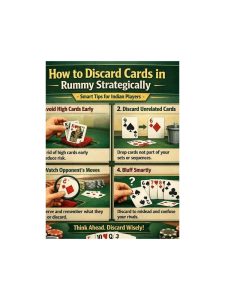
Rummy FAQ: When Does a Pair Stop Deserving Another Draw?
A pair can be one of the most useful shapes in a rummy hand, but it can also become a comfortable excuse to wait. The pair deserves another draw when it has several plausible improvements, supports a necessary group, or is cheap to keep while other parts of the hand develop. It becomes less attractive when the route is narrow or expensive.
Begin with the pair’s potential jobs. Can either card join a sequence? Can the pair become a valid group under the format? Does one card connect to a nearby card already in your hand? A pair with several jobs is flexible. A pair that depends on one exact rank may be less valuable than it appears.
Consider the opportunity cost. Every card you keep is a place that could hold a new connection. If the pair occupies two slots while another part of the hand is carrying high points or an unfinished requirement, waiting may increase exposure. The pair is not free simply because it looks organized.
Information from the table can update the decision. A visible discard that would complete the pair’s best route may be relevant, while several related cards disappearing makes the route weaker. Keep uncertainty honest: a card not seen is not guaranteed to remain available, and a card seen once is not necessarily impossible to find.
Set a review point before you continue. After the next draw, ask whether the pair gained a connection, lost a route, or stayed exactly the same. If nothing changed and a safer discard is available, release one card or abandon the plan. This prevents repeated waiting from becoming automatic.
There are exceptions. A pair may be worth keeping near the beginning when it protects a low-cost route, or near the end when it completes an important requirement with little risk. The same shape can deserve different treatment at different stages.
The practical answer is therefore conditional. Keep the pair while its flexibility is real and its cost is acceptable. Once it offers hope without a reasonable path, treat it as an ordinary discard candidate.
Do not measure the pair only by how often it has survived. Keeping it for several turns does not create value by itself; it may simply reflect that no decision was made. At each review point, compare the pair with the best available alternative. This small reset makes it easier to release a familiar shape when the hand has moved on.